


Monarch Tagging With Zoo Knoxville
Fall marks a time of deep change for trees, temperatures, animals, and also one special Education Curator, Steve McGaffin. This week, Steve begins his retirement, but he had one last special experience to mark another’s transition before he leaves the Zoo. Follow along with us as we learn about the preparatory period for a North American Monarch Butterfly before it gets tagged and takes a mesmerizing flight from the Appalachians to Mexico.
The Ultimate Transformation
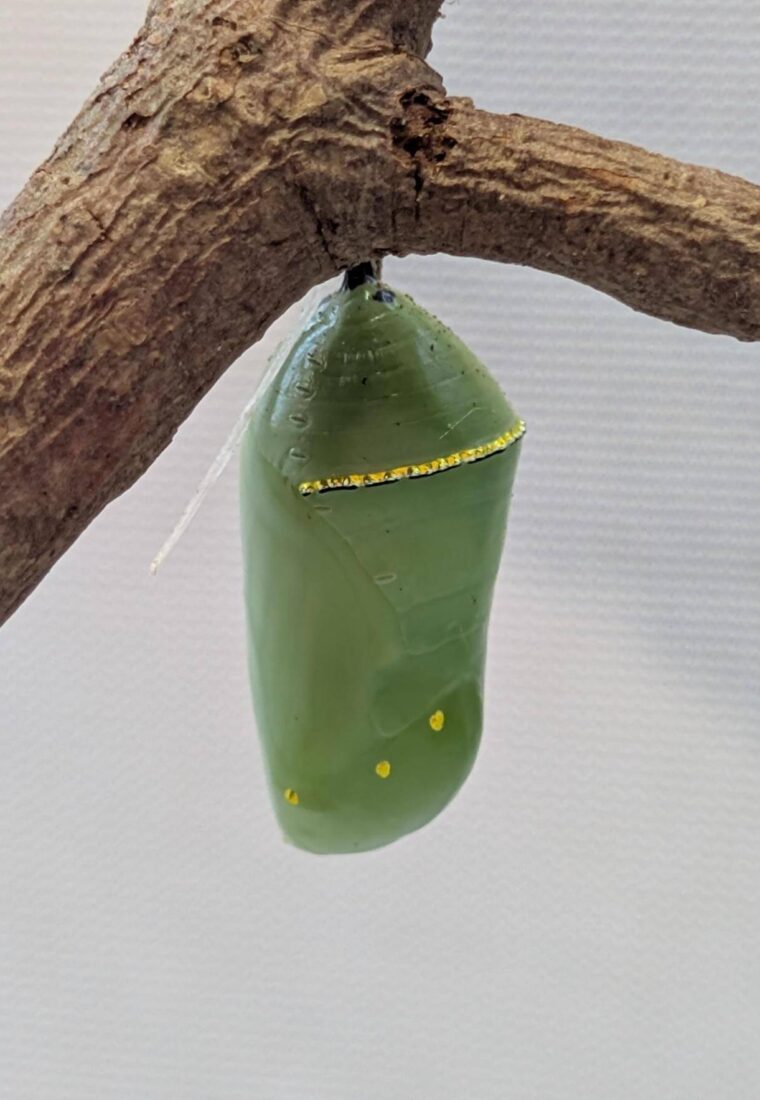
This beautiful chrysalis was found in our sloth holding area near the bottom of a wall. This area gets wet when Keepers clean it, so Steve and our team moved the chrysalis to protect it.
The Chrysalis was attached to the wall by a flat web of silk. Our team carefully removed the silk and spun it gently to make a thread. The other end of the silk was attached to the cremaster, which is a short stalk at the top of the chrysalis.
Next, they tied dental floss to the silk thread and then tied the floss to a stick. Lastly, they placed the stick inside a mesh cube where the chrysalis would be safe and where the butterfly would have room to hang from the chrysalis once it emerged.
Your eyes aren’t mistaken, it’s embellished with gold trim and dots! Steve explained that once a caterpillar becomes a chrysalis – everything becomes a sticky goo made up of cells that will become the butterfly. This is referred to by scientists as “butterfly soup”. This transformation takes about 1-2 weeks.
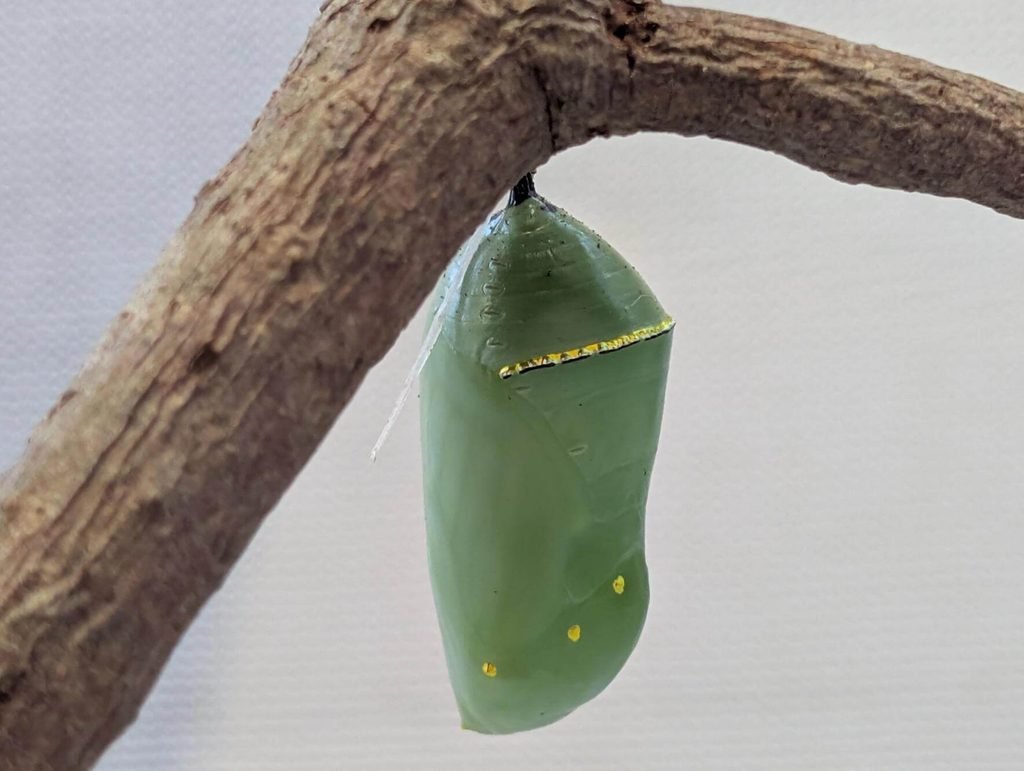
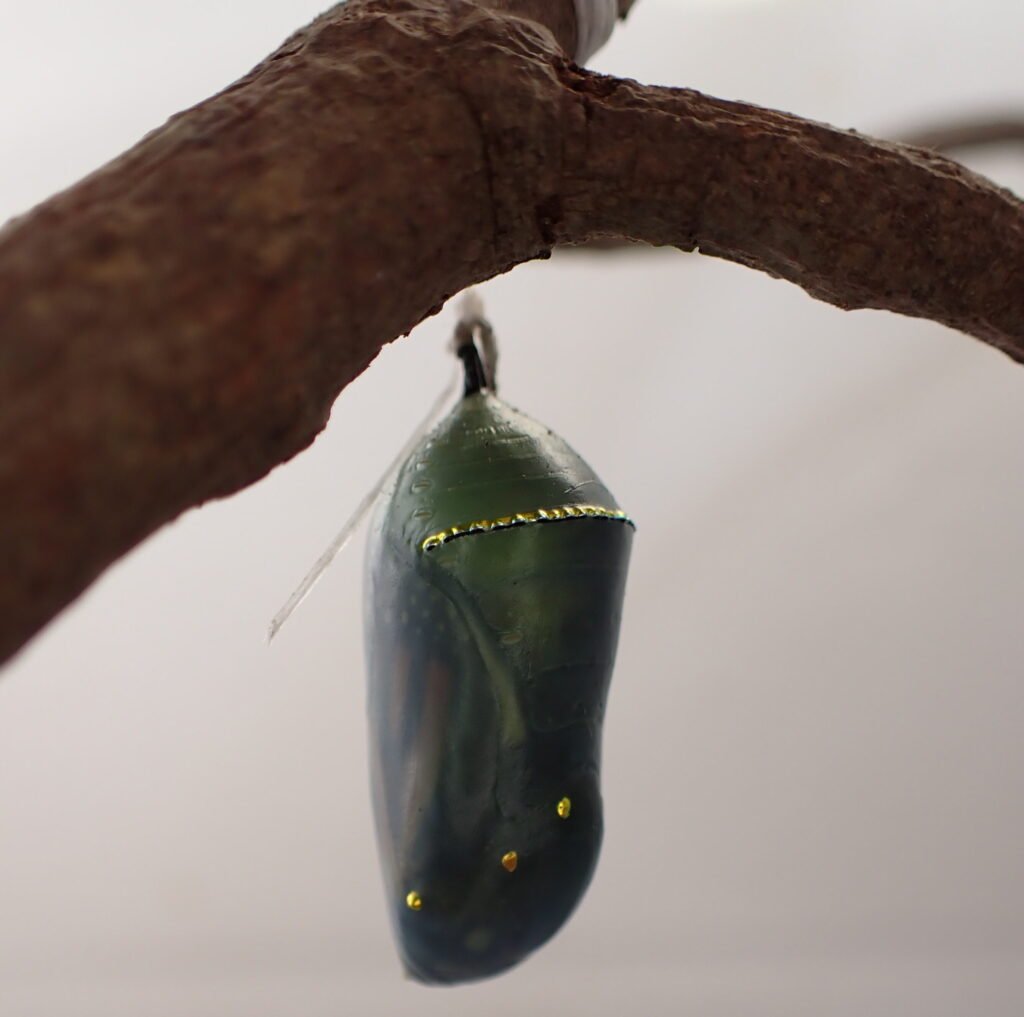
The Monarch Butterfly emerged from its chrysalis this past weekend in about 5 minutes. From here the butterfly pumped its wings, rid itself of waste and dried. This can take up to about 4 hours.
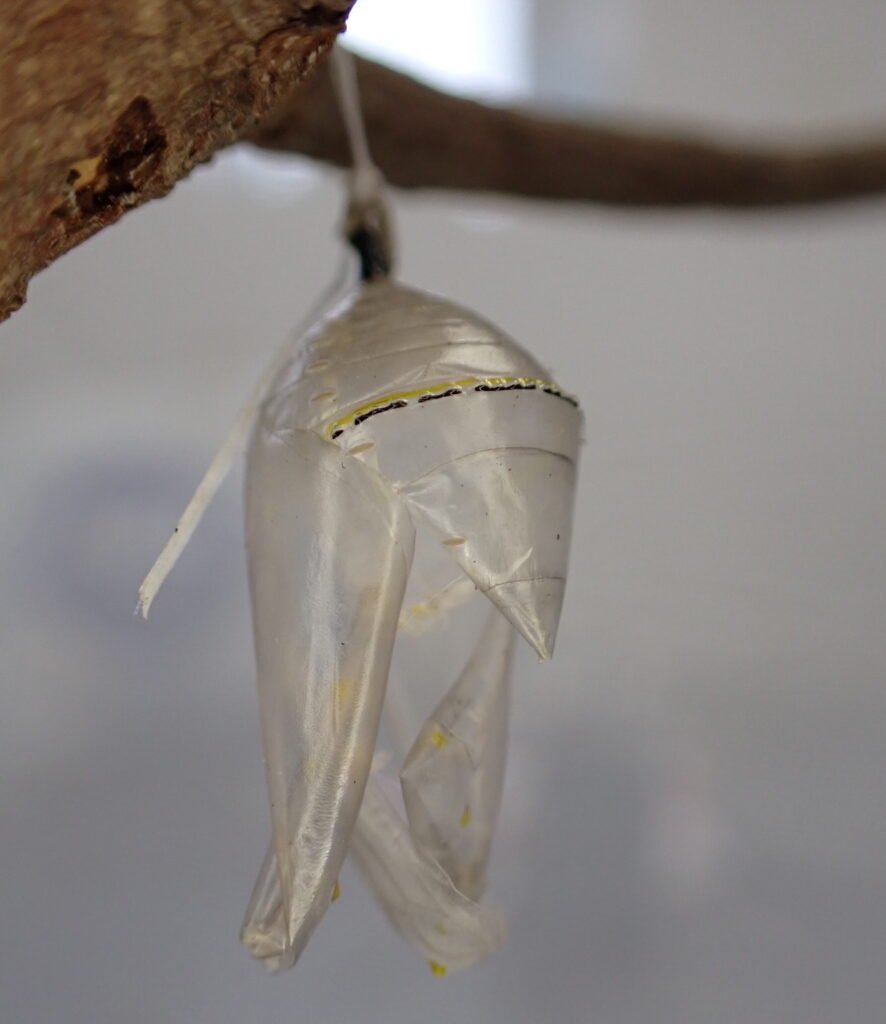
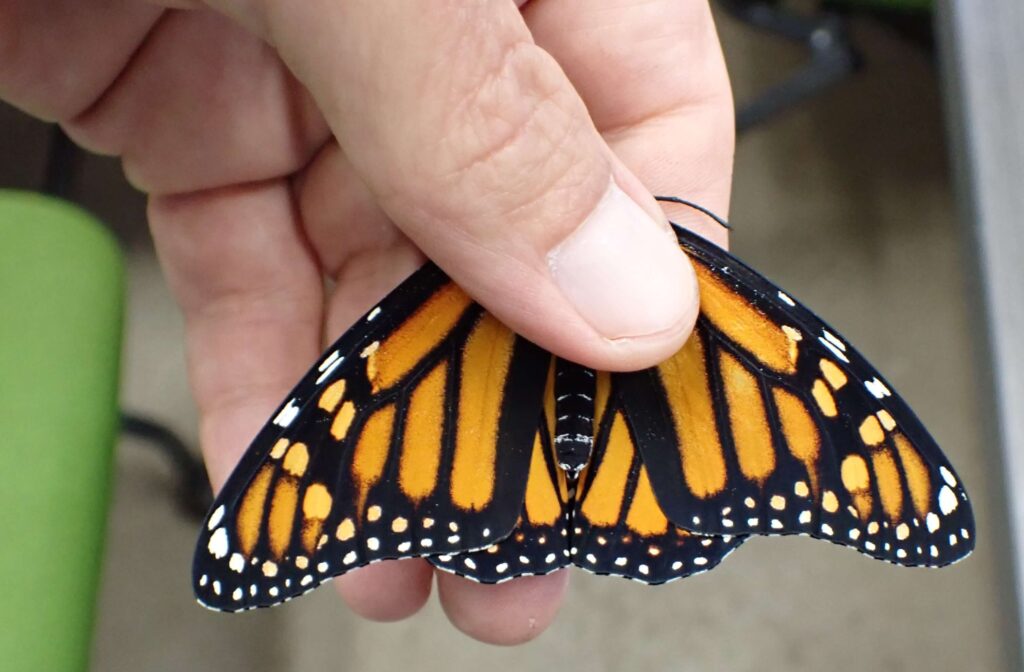
Our keepers got to meet a female Monarch butterfly! She was affectionately named Dolly. Our team gave her 24 hours to dry off and rest from her hard work.
Monarch Tagging: Zoo Knoxville and SAFE North American Monarch
Then it was time to tag Dolly so that hopefully someone else can track her movements as she travels!
Since 2019, Zoo Knoxville has been a charter program partner of SAFE North American Monarch. SAFE stands for Saving Animals From Extinction. It’s a collective under the Association of Zoos and Aquariums that uses its members to help save species. This particular program works to maintain the Monarch population.
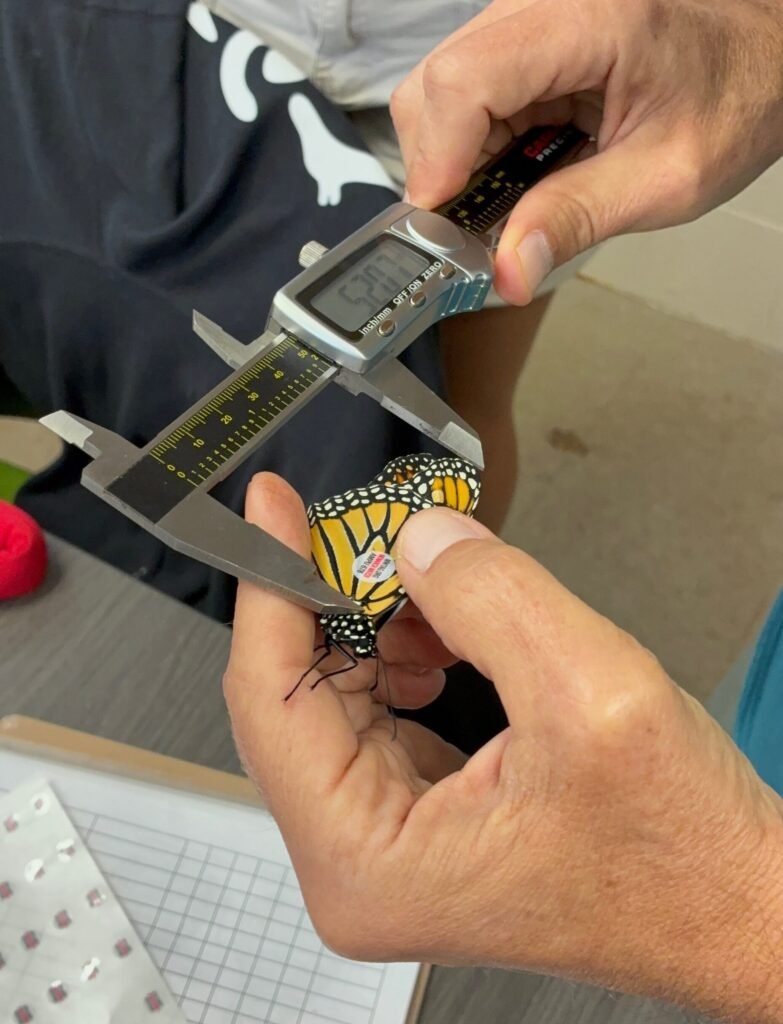
Our team gently picked up Dolly holding all four of her wings by the front edge. Don’t worry, Monarch Butterflies are strong and perfectly safe for this gentle handling that is done across the continent to track butterflies.
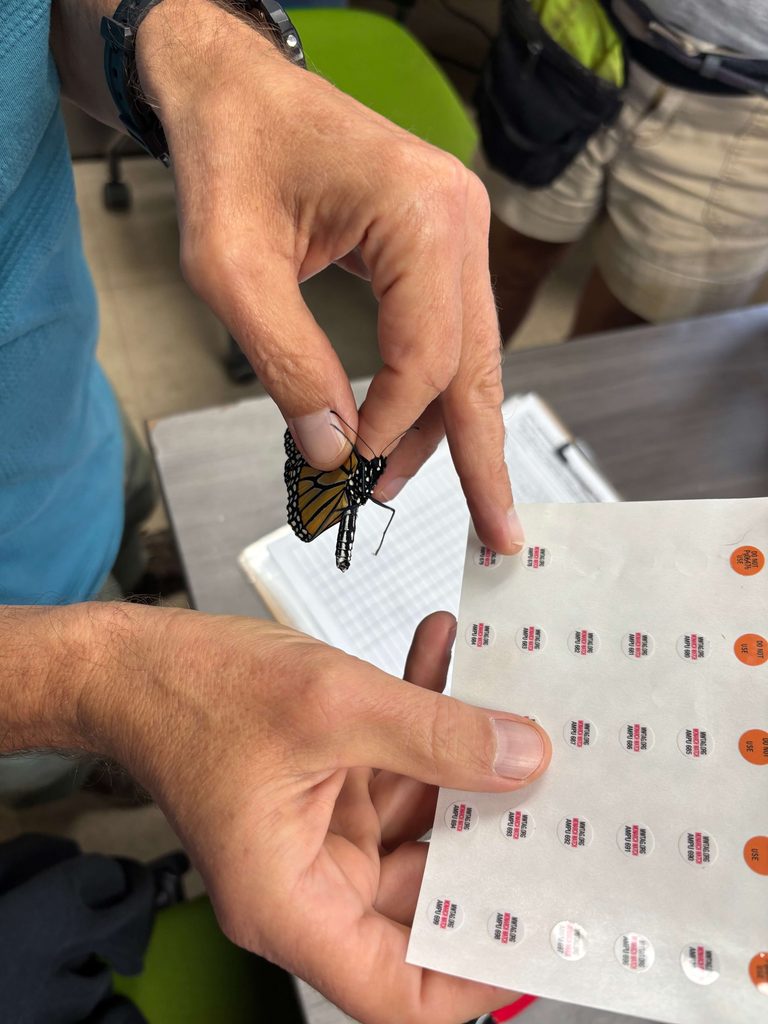
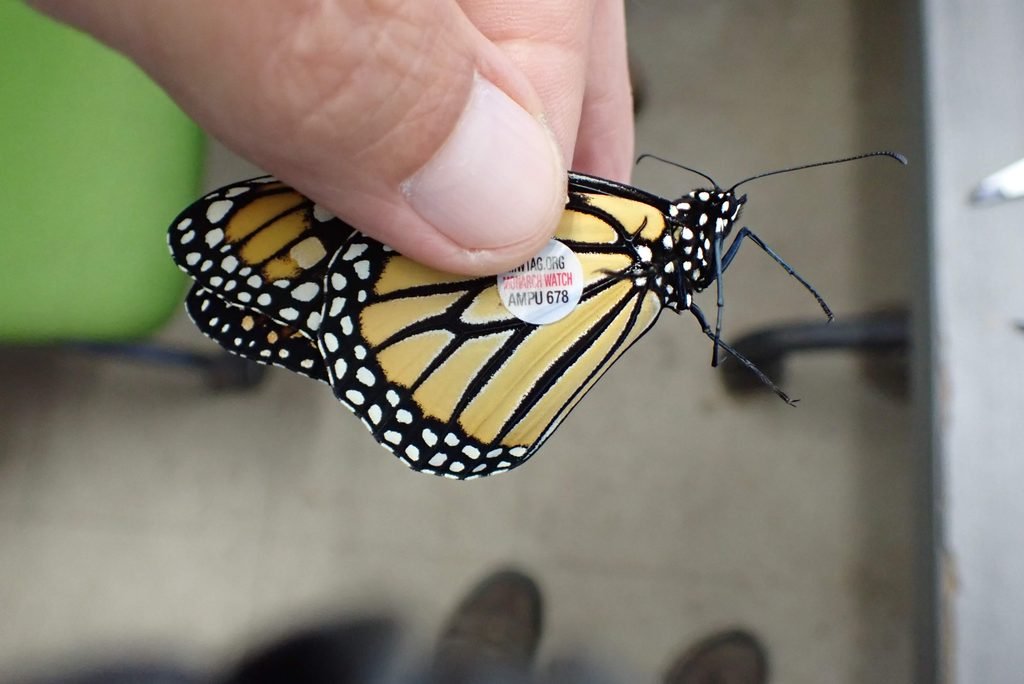
Our team used small adhesive tags from Monarch Watch. Check out the letters, numbers and email address for contacting Monarch Watch on the tag. Those are unique to every sticker and will allow someone to reach out for more information if they spot Dolly.
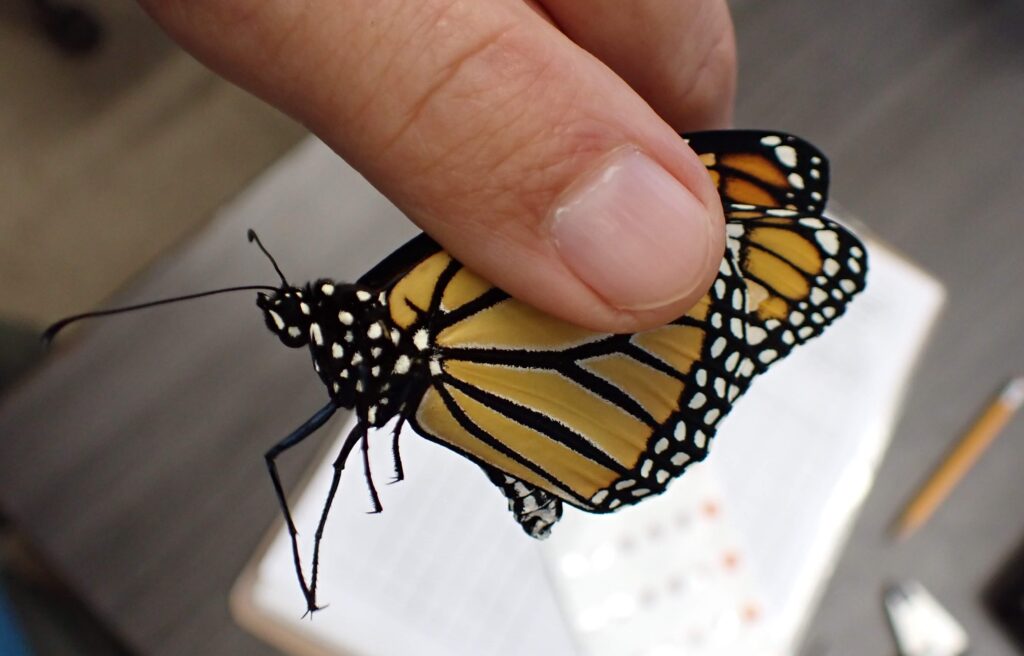
Next, came placing the tag. Our team placed Dolly’s tag in the center of her discal cell which is a long orange area near the center of the hind wing that’s shaped like a mitten. They then recorded the tag number, date, gender, whether she was wild or reared, wing length and location on a data sheet that will be submitted to Monarch Watch.
Under Monarch Watch community scientists tag around 85,000 to 100,000 Monarchs a year.
Finding Her Wings
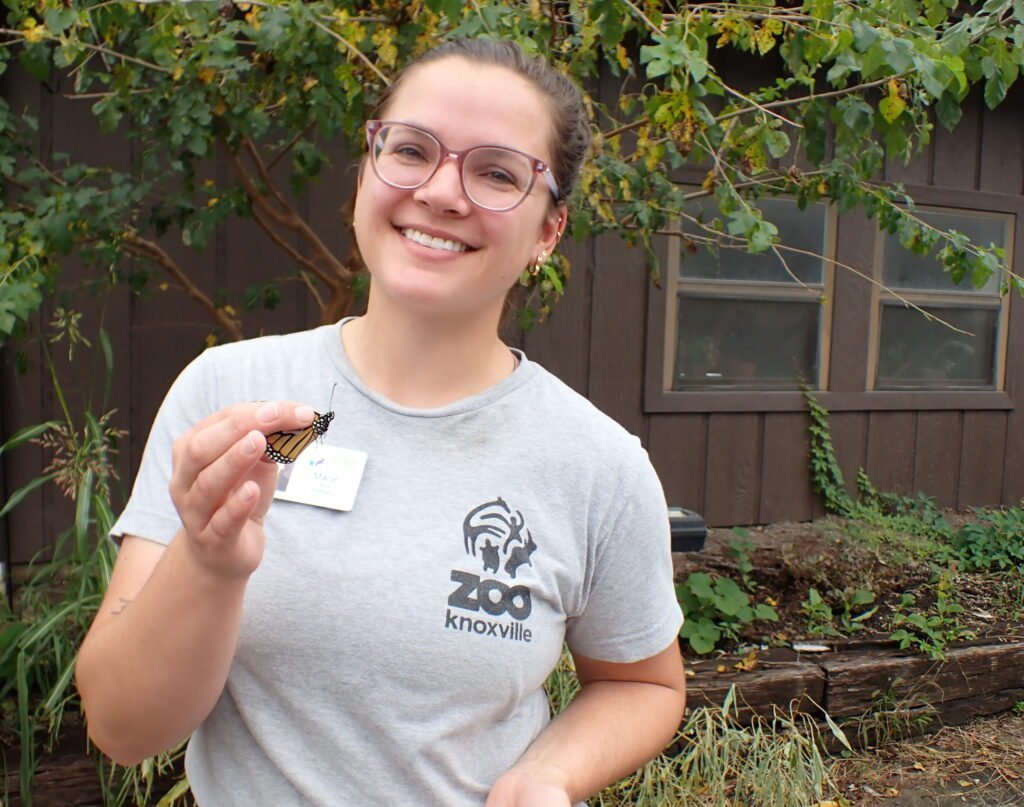
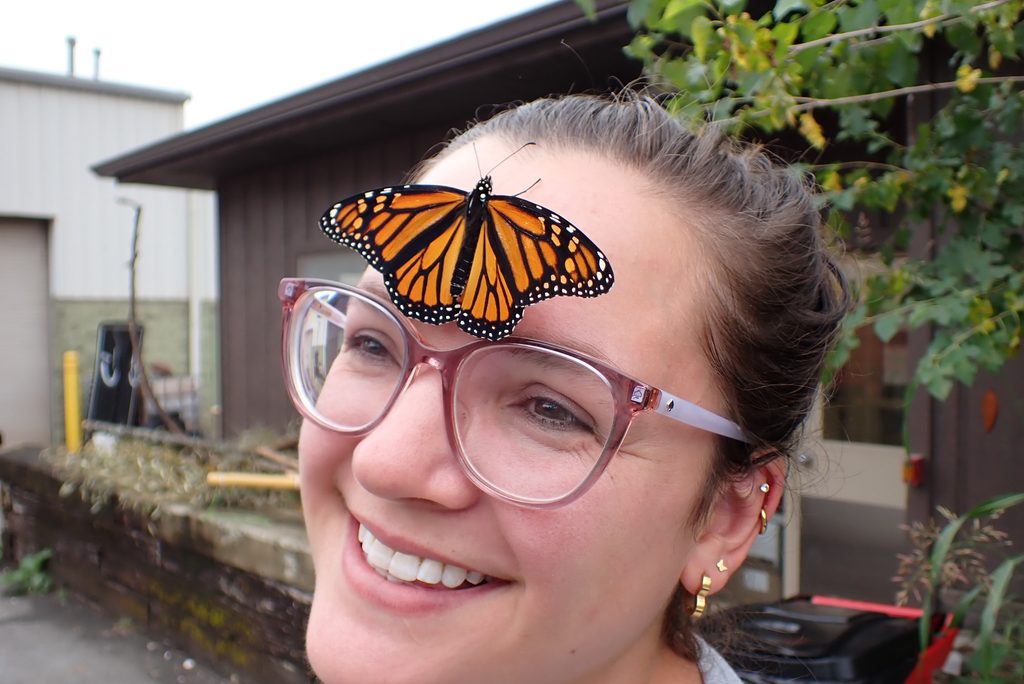
Lastly, Dolly took flight! It only took her 10 seconds to launch. Hopefully, in March or April we can check Dolly’s tag number to see if she was seen anywhere between here and the Oyamel forest in Mexico.
Your Part in Protecting Monarchs
Monarchs are small but mighty pollinators that keep us going. It’s only right that we at least match their effort as a thank you.
“In the Southeast alone monarchs have been documented nectaring on at least 24 different species of flowering plants. That means they are helping with the reproduction of a wide variety of wildflowers, trees and shrubs. Despite being toxic, they are food for many small predators, including some songbirds. And of course, they wow us with their beauty and their abilities,” McGaffin shared.
Here are a few practical ways you can support the well-being of Monarchs:
- Removing exotic, invasive plants and replacing them with native plants. Here are some examples:
- Purple Coneflower
- Joe-Pye Weed
- Ashy Sunflower
- Eastern Red Columbine
- Milkweed
- Plant and maintain Milkweed. Monarch butterflies lay their eggs on these plants.
- Avoid using pesticides and opt for sustainable alternatives
- Decrease your carbon footprint as you are able. Some examples are: driving a fuel-efficient car, purchasing Energy Star label appliances, winterizing your home and supporting renewable energy.
- Volunteer to tag Monarchs! Monarch Watch is a great group to work with. You can also likely find a community or regional group to work with as well.
A Legacy of Helping Others Take Flight
McGaffin has dedicated 30 plus years to Zoo Knoxville. As our Education Curator, he’s inspired learning through various school and community programs. Plus, he’s been instrumental in our involvement with SAFE North American Monarch. We wish him the very best in his retirement. This Monarch was his last tag with us, though certainly not his last.
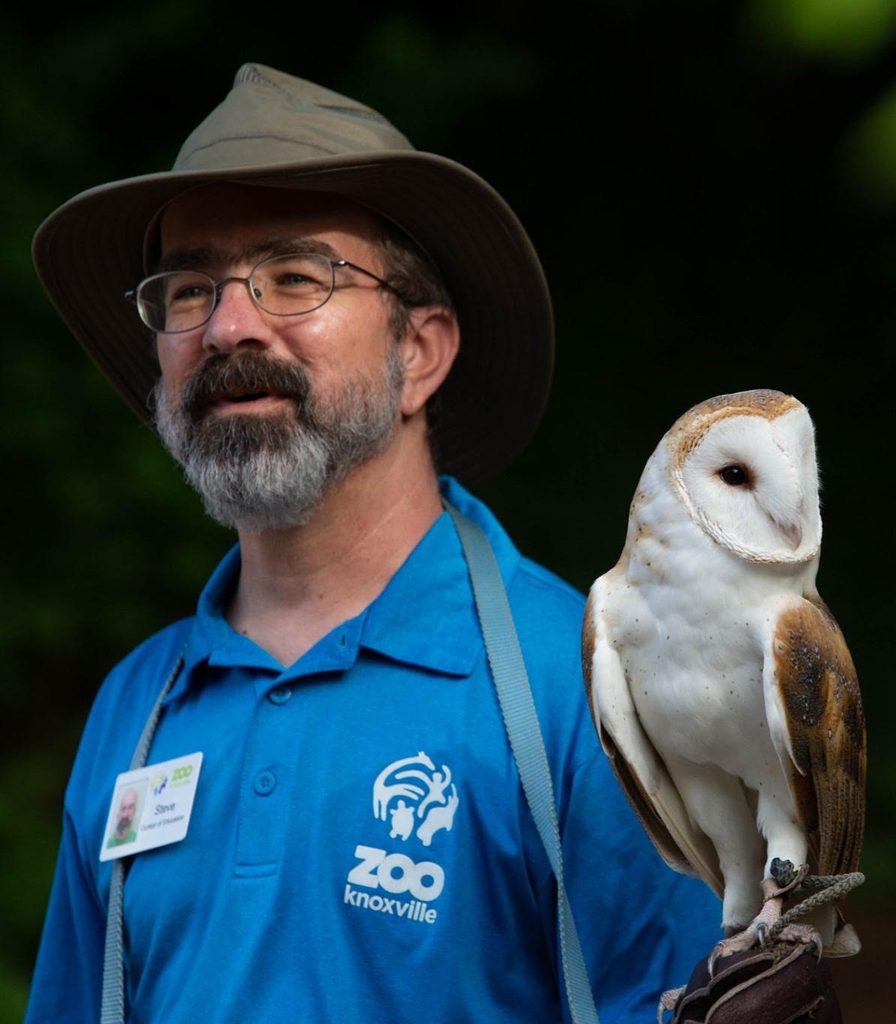
When asked what we loved about tagging and being part of the process, he said:
“I love that I’m contributing to research that’s helping us understand an important and imperiled species. Engaging other people with the same opportunity and inspiring them to be more curious, appreciate science and realize they can help wildlife in their community helps me feel connected and positive about our future.”
Thanks for everything, Steve. May we continue to lead with curiosity as we support wildlife in our communities.
Help Protect Monarch Butterflies Today!
Our Mission
Every story at Zoo Knoxville is built on one topic: conservation. Like ecosystems link animals across the world, stories link people to action. Every event, birth, challenge and update tells us one more way we can connect with wildlife and improve both our futures.
Other News
Boo! at the Zoo Menu Highlights: Boo-ed Up Bites and Spooky Sips
Leave it up to our dedicated chefs at Lancer Hospitality to take you somewhere both spooky and delicious this fall! Boo!
Zoo Knoxville Announces New VP of Education & Conservation
We are pleased to announce the appointment of Michelle Kolar as Vice President of Education & Conservation. Kolar brings more than 20 years of experience leading education, conservation and public engagement programs at accredited zoos, aquariums and museums across the country.
Zoo Knoxville Welcomes African Lion Cubs
We’re celebrating the arrival of two African lion cubs, Sammie and Sika, born July 14 to parents Zahra and Maji. The two male cubs are currently being hand-reared by Zoo Knoxville’s animal care team and are thriving.